About Community Action
Who we are and what we do
Established as part of the national Community Action movement launched by the Economic Opportunity Act of 1964, CAAA serves as the unifying body for Alabama's 18 Community Action Agencies.

The Community Action Association of Alabama empowers its member agencies to eliminate the causes and conditions of poverty through resource development, statewide coordination, and technical and training assistance.
These agencies are committed to addressing the causes and conditions of poverty through comprehensive services, community engagement and advocacy. CAAA envisions a strong, committed partnership among Alabama's Community Action Agencies, empowered to produce measurable outcomes in eliminating poverty.
Most poverty-related organizations focus on a single area of need — job training, health care, housing or economic development. Community Action Agencies address multiple needs through a comprehensive approach, develop partnerships with other community organizations, involve low-income clients in the agency's operations, and administer a full range of coordinated programs designed to have a measurable impact on poverty.
Who we are
A Community Action Agency has a tripartite board structure designed to promote the participation of the entire community in the reduction or elimination of poverty.
What we do
Community Action Agencies involve the community — elected public officials, private sector representatives and especially low-income residents — in assessing local needs and attacking the causes and conditions of poverty.
How we work
A Community Action Agency focuses available local, state, private and federal resources to help low-income individuals and families acquire skills and knowledge, gain access to new opportunities and achieve economic self-sufficiency.
Our roots
Born from the Economic Opportunity Act of 1964
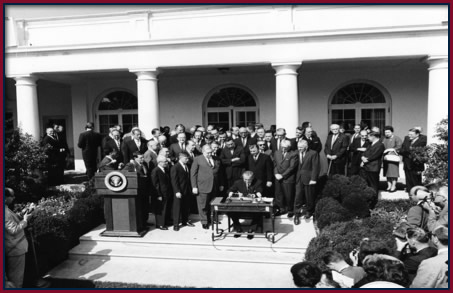
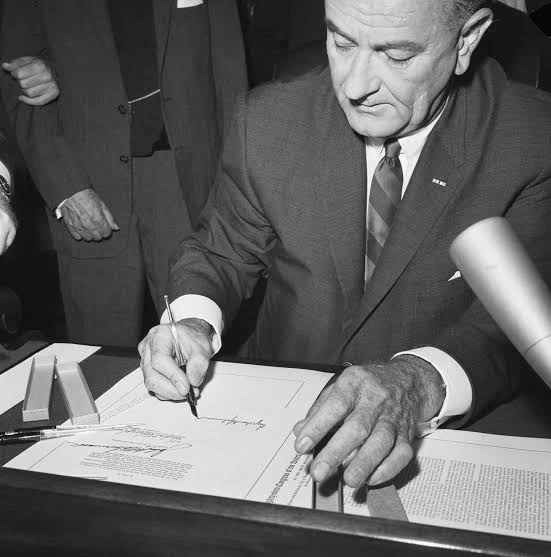
On August 20, 1964, President Lyndon B. Johnson signed the Economic Opportunity Act, declaring a War on Poverty and creating the Community Action movement that continues in Alabama today.
The Promise of Community Action
“Community Action changes people's lives, embodies the spirit of hope, improves communities, and makes America a better place to live. We care about the entire community, and we are dedicated to helping people help themselves and each other.”
How we make an impact
What makes an agency a Community Action Agency
Four criteria define every agency in the CAAA network.
- 1
Has received designation as a Community Action Agency from local government under the Economic Opportunity Act of 1964, or from the state under the Community Services Block Grant Act of 1981, as amended.
- 2
Is recognized as an eligible entity as defined in the CSBG Act and can receive funding from the state under the Community Services Block Grant.
- 3
Has a governing board consisting of at least one-third democratically selected representatives of low-income people, one-third local public officials or their designees, and the remainder representatives of business, industry, labor, religious, social welfare and other private groups.
- 4
Belongs to a national network of similar agencies, the majority of which received their initial designation, federal recognition and funding under the amended Economic Opportunity Act of 1964.
Mode of operation
A Community Action Agency carries out its mission through
Community-wide assessments
Assessments of local needs and community strengths.
Antipoverty plans
Comprehensive antipoverty plans and strategies.
Direct services
Provision of a broad range of direct services.
Resource mobilization
Mobilization of financial and non-financial resources.
Advocacy
Advocacy on behalf of low-income people.
Partnerships
Partnerships with other community-based organizations to eliminate poverty.
We are here for the Alabama community. Let us know how we can help.